INS Memory Disorders Research Award Recipients
This award honors the contributions of Dr. Laird Cermak and recognizes the impact he has had in the area of memory and memory disorders. The prize is awarded at the Society’s Annual and Mid-Year Meetings for the best research presented in the area of memory or memory disorders. The recipient is selected at the discretion of each Program Chair. No formal application is necessary.
* Award recipients receive an honorarium of $500 USD.
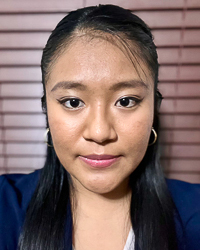
Memory Disorders Research Award Recipient
Ana Jaquelin Ramos-de Jesus
INS 50th Annual Meeting New Orleans,
Virtual Meeting – February 2-4, 2022
Diabetes mellitus is associated with decreased memory functioning and changes in brain structure such as white matter disease and hippocampal atrophy. The link between diabetes and memory functioning may be modifiable and dependent on both clinical and self-management of blood glucose levels. Environmental factors such as adverse neighborhood factors may pose barriers and limit access to diabetes care and control of blood glucose.
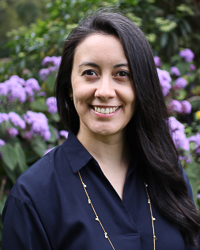
Memory Disorders Research Award Recipient
Diana Ramirez
INS 2021 Mid-Year Meeting Melbourne,
Australia – June 30 – July 3, 2021
“The experience and acceptability of smartphone reminder app training for people with acquired brain injury: a mixed methods study” (La Trobe, AUS)
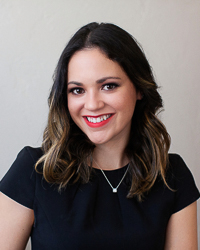
Memory Disorders Research Award Recipient
Mónica Acevedo-Molina
INS 49th Annual Meeting San Diego,
Virtual Meeting – February 2-5, 2021
We replicated an important finding from the literature with non-Hispanic White young adults, namely that EAM tends to be described mostly with episodic details. From a feasibility standpoint, our findings suggest that we can conduct the Autobiographical Interview in bilingual Hispanics in both English and Spanish. Future directions include recruiting older monolingual and bilingual Hispanics to examine the relationship between age and EAM specificity among this population. Given the present findings, there is ample opportunity to observe age-related decline in EAM episodic specificity.

Laird S. Cermak Award Recipient
Nicole Walker
INS 48th Annual Meeting Denver, Colorado,
USA – February 5-8, 2020
Most cross-sectional studies have not found strong relationships between β-amyloid burden and memory in normal elderly, possibly because many memory tests do not specifically target the core consolidation deficits associated with Alzheimer’s disease (AD). Memory consolidation occurs over extended periods of time (days to weeks), suggesting that relatively short (≤30 minutes) delays may not be sensitive to early AD. We hypothesized that β-amyloid burden—a hallmark feature of AD—would relate to worse memory performance following an extended 1-week delay period in clinically normal adults, but not following delays ≤30 minutes.
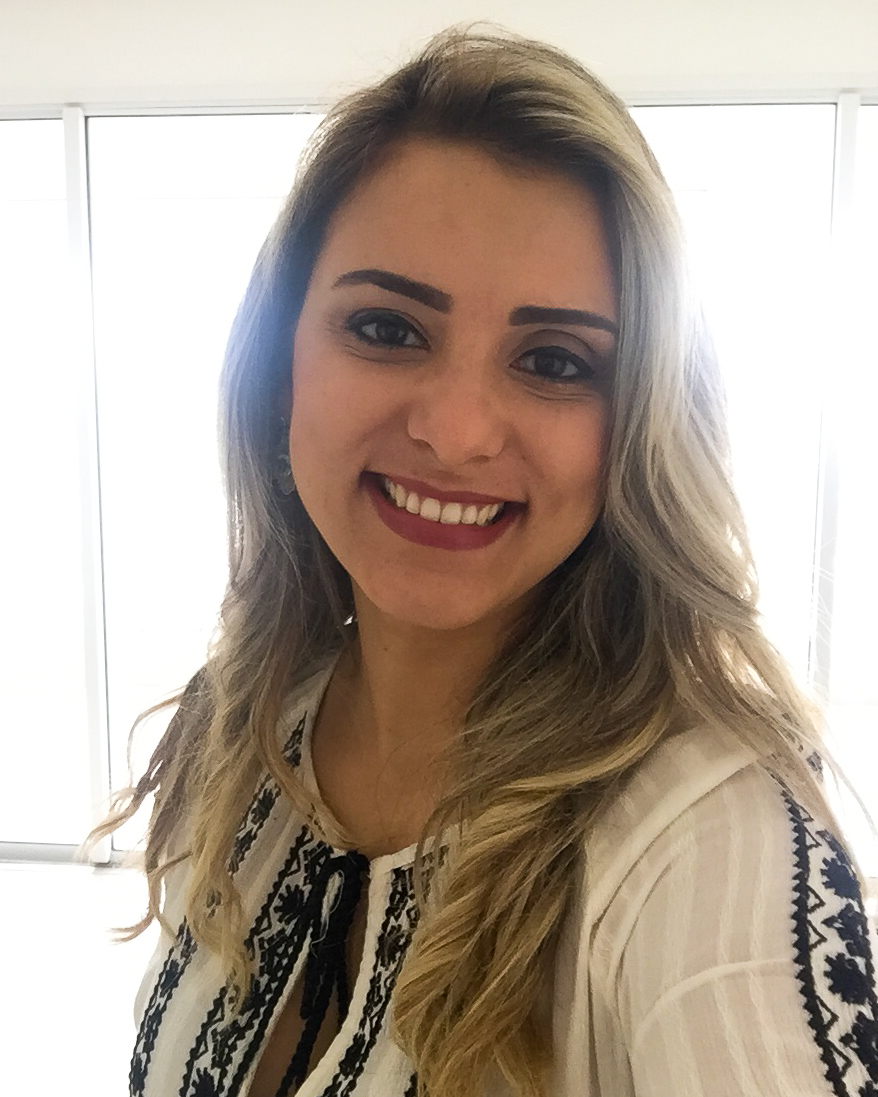
Laird S. Cermak Award Recipient
Alana Batista
INS 2019 Mid-Year Meeting Rio de Janeiro,
Brazil – July 10-12, 2019
Everyday memory deficits after stroke typically involve problems in associating different stimuli, such as faces and names. Therefore, Mnemonic Strategy Training (MST) could reduce the impact of these deficits in this group of patients. The goal of the present study was to investigate the far and near-transfer effects of MST in patients with Chronic Left Ischemic Stroke patients (CLIS).

Laird S. Cermak Award Recipient
Jordan Stiver
INS 2019 Annual Meeting New York City,
USA – February 20-23, 2019
While research on sleep and cognition has largely focused on mean values of sleep measured across multiple nights, few studies have examined the potentially negative effects of night-to-night variability in sleep quality on brain function. The purpose of this study was to determine the relationship between variability in sleep quality and spatial learning and memory in young adults. We hypothesized that greater intraindividual sleep efficiency variability (SEv) would predict poorer spatial learning and recall performance.
Laird S. Cermak Award Recipient
Joanna Ciafone
INS 2018 Mid-Year Meeting Prague,
Czech Republic – July 18-20, 2018
Efforts are being made to identify dementia with Lewy bodies (DLB), the second commonest cause of neurodegenerative dementia after Alzheimer’s disease (AD), in the Mild Cognitive Impairment phase (MCI-LB), during which intervention on the disease processes would likely be most successful. Few studies have targeted this group and the cognitive profile of prodromal DLB is therefore unclear. The present study aims to elucidate the neuropsychology of DLB in the MCI phase (MCI-LB) relative to MCI due to AD (MCI-AD) and healthy controls.
Laird S. Cermak Award Recipient
Karen Blackmon
INS 46th Annual Meeting Washington, D.C,
USA – February 14-17, 2018
MRI-negative temporal lobe epilepsy (TLE) may be a distinct syndrome from TLE with mesial temporal sclerosis (MTS). Common imaging and neuropsychological features of TLE with MTS are well known; yet, distinguishing features in MRI-negative TLE are only beginning to be described. This study aims to identify quantitative MRI markers of memory impairment in MRI-negative TLE.
Laird S. Cermak Award Recipient
Eddy Larouche
INS 2017 Mid-Year Meeting Cape Town,
South Africa – July 5-8, 2017
The diagnosis of mild cognitive impairment (MCI) in older adults at risk for Alzheimer’s disease is based on perceived and objective memory decline. It is still unclear whether older adults with MCI retain sufficient meta-awareness to evaluate their own memory capacities accurately. All previous studies addressing meta-awareness in MCI used cross-sectional designs. This study aimed at investigating the association between the evolution of objective and subjective memory in a longitudinal clinical trial. Forty-one participants with MCI were enrolled in a randomized-controlled trial comparing two non-pharmacological interventions, one based on mindfulness, the other on psychoeducation about memory in aging.
Laird S. Cermak Award Recipient
Sharon Simon
INS 45th Annual Meeting New Orleans,
Louisiana, USA – February 1-4, 2017
To evaluate the efficacy of mnemonic strategy training (MST) versus an active education control program (EP) in patients with amnestic mild cognitive impairment (aMCI).
Laird S. Cermak Award Recipient
Best Submission In Memory Or Memory Disorders
Charlotte Russell
INS 2016 Mid-Year Meeting London,
England, UK – July 6-8, 2016

Laird S. Cermak Award Recipient
Brianne Bettcher
INS 44th Annual Meeting Boston, Massachusetts,
USA – February 3-6, 2016
Accumulating evidence suggests that inflammatory processes play a role in Alzheimer’s Disease (AD). Despite this established association, little is known about how inflammation-related genes relate to memory function in the earliest stages of pathogenesis. We hypothesized that pro- and anti-inflammatory single nucleotide polymorphisms (SNPs) would independently predict memory function in Mild Cognitive Impairment.
Laird S. Cermak Award Recipient
Rachel Buckley
INS 2015 Mid-Year Meeting Sydney,
Australia – July 1-4, 2015

Laird S. Cermak Award Recipient
Crystal Baker
INS 43rd Annual Meeting Denver,
Colorado, USA – February 4-7, 2015
The current study examined in musicians and nonmusicians the possibility of a subsidiary tonal system, in addition to the phonological loop and visuospatial sketchpad, for processing musical information within Baddeley’s multicomponent working memory model.
Laird S. Cermak Award Recipient
Yoni Pertzov
INS 2014 Mid-Year Meeting Jerusalem,
Israel – July 9-11, 2014
It has been suggested that objects are maintained as integrated units in working memory and when forgotten they are lost as a whole, without leaving any trace. To study the relevance of this claim to real-life situations, we investigated how object-location information is remembered – and forgotten.
Laird S. Cermak Award Recipient
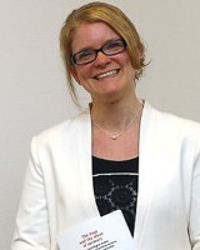
Lynn Oelke
INS 42nd Annual Meeting Seattle, Washington,
USA – February 12-15, 2014
Presented for the Best Submission in Memory Research
Source Memory and Generation Effects in Parkinson’s Disease
Laird S. Cermak Award Recipient
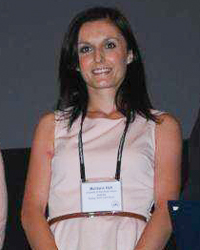
Bonnie van Geldorp
INS 2013 Mid-Year Meeting Amsterdam,
the Netherlands – July 10-13, 2013
Presented for the Best Submission in Memory Research
Relational and Conjunctive Working Memory Binding across Age
Laird S. Cermak Award Recipient
Muireann Irish
INS 41st Annual Meeting Waikoloa,
Hawaii, USA – February 6-9, 2013
Laird S. Cermak Award Recipient
I-Wen Chen
INS 2012 Mid-Year Meeting Oslo,
Norway – June 27-30, 2012
Laird S. Cermak Award Recipient
Christina Wierenga
INS 40th Annual Meeting Montreal, Quebec,
Canada – February 15-18, 2012
Laird S. Cermak Award Recipient
Victoria Martin
INS 2011 Mid-Year Meeting Auckland,
New Zealand – July 6-9, 2011
Laird S. Cermak Award Recipient
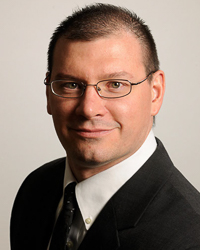
Jessica Payne
INS 39th Annual Meeting Boston, Massachusetts,
USA – February 2-5, 2011
Laird S. Cermak Award Recipient
Benjamin Hampstead
INS 2010 Mid-Year Meeting Krakow,
Poland – June 30-3, 2010
Laird S. Cermak Award Recipient
Nathan Hantke
INS 38th Annual Meeting Acapulco,
Mexico – February 3-6, 2010
Laird S. Cermak Award Recipient
Pauline Spaan
INS 2009 Mid-Year Meeting Helsinki,
Finland and Tallinn, Estonia – July 29-1, 2009
Laird S. Cermak Award Recipient
Elizabeth Mitchell
INS 37th Annual Meeting Atlanta, Georgia,
USA – February 11-14, 2009
Laird S. Cermak Award Recipient
Marianna Banassi-Werke
INS 2008 Mid-Year Meeting Buenos Aires,
Argentina – July 2-5, 2008
Laird S. Cermak Award Recipient
Michael Seidenberg
INS 36th Annual Meeting Waikoloa, Hawaii,
USA – February 6-9, 2008
Laird S. Cermak Award Recipient
Sandra Lehmann
INS 2007 Mid-Year Meeting Bilbao,
Spain – July 4-7, 2007

Laird S. Cermak Award Recipient
Roy Kessels
INS INS 34th Annual Meeting USA, Boston,
Massachusetts – February 1-4, 2006
Feature Binding in Memory: A comparison of “what, where and when” in young and older adults
My study systematically compare age-related decline in item/context memory for single features with context memory for multiple features (in which information has to be integrated). The results showed an overall context-memory deficit for spatial and temporal information rather than a specific binding deficit in older adults.
Laird S. Cermak Award Recipient
Klemens Gutbrod
INS 2006 Mid-Year Meeting Zurich,
Switzerland – July 26-29, 2006
Laird S. Cermak Award Recipient
Hans J. Markowitsch
INS 31st Annual Meeting Honolulu, Hawaii,
USA – February 5-8, 2003
Laird S. Cermak Award Recipient
Paula Alhola
INS 2005 Mid-Year Meeting Dublin,
Ireland – July 6-9, 2005
Laird S. Cermak Award Recipient
Carrie McDonald
INS 31st Annual Meeting Honolulu, Hawaii,
USA – February 5-8, 2003